Seeing sparks inside your microwave can be alarming, especially when accompanied by crackling sounds, bright flashes, or a burning smell. This phenomenon, commonly known as microwave arcing, occurs when concentrated electrical energy produces a discharge inside the cooking cavity. Although occasional sparking may result from something as simple as a forgotten metal utensil, repeated arcing can indicate a more serious problem. Common causes include aluminum foil, metallic food packaging, accumulated grease, damaged waveguide covers, and deteriorating interior surfaces. Certain foods can also produce sparks under specific conditions, even when no metal utensils are present. Understanding why your microwave is sparking is important because continued operation may damage internal components or create a fire hazard. Fortunately, many causes can be identified through careful visual inspection without disassembling the appliance. However, not every sparking problem can be resolved through cleaning or removing an unsuitable container. This guide explores the common causes of sparking inside your microwave, explains the warning signs, and identifies when professional microwave repair is necessary.
1. Metal Objects and Aluminum Foil Inside the Microwave
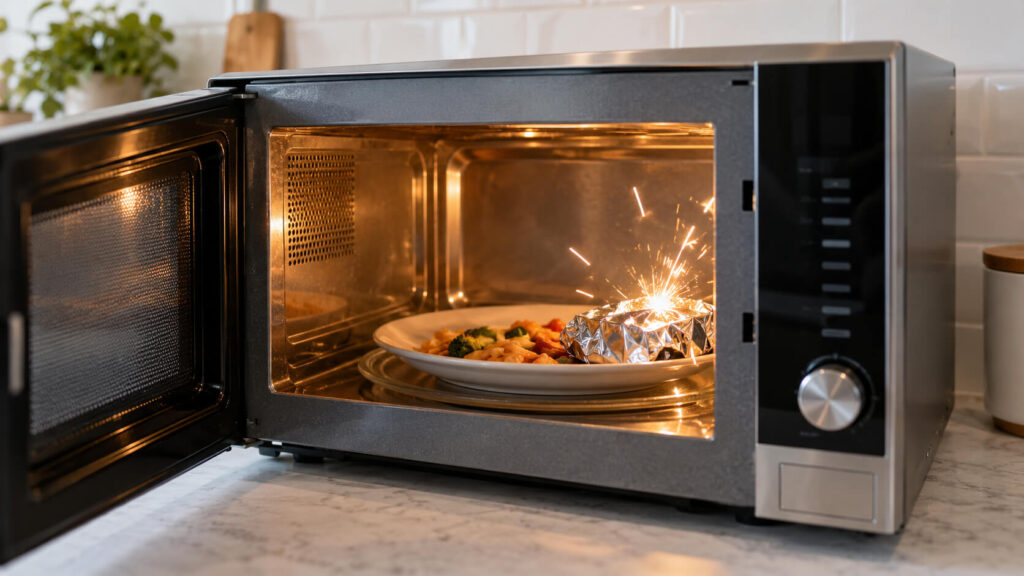
Metal objects are among the most common causes of sparking inside a microwave oven. When microwave energy interacts with conductive materials, electrical charges can concentrate around particular surfaces, edges, and points. Under certain conditions, this concentration can create an electrical discharge known as arcing. Forks, knives, metal twist ties, and crumpled aluminum foil are common examples of objects that may produce sparks. Thin or sharply pointed metal surfaces are particularly problematic because they can concentrate electrical fields. A forgotten spoon or piece of foil may cause sudden flashes and crackling sounds during cooking. However, not every metal object automatically produces sparks, since some microwave ovens are designed to accommodate specific metal accessories. Aluminum foil may also be permitted for limited shielding applications when the appliance instructions explicitly allow it. Using foil incorrectly, especially when it is crumpled or positioned near the cavity walls, can create dangerous conditions. If sparking occurs, the microwave should be stopped immediately. Once the appliance has been switched off and the contents are safe to handle, any unsuitable metal objects should be removed. Using microwave-safe cookware and following the appliance’s operating instructions helps reduce the risk of recurring arcing.
2. Dishes and Food Packaging Containing Metallic Materials
Not all metallic materials inside a microwave are immediately obvious. Some plates, bowls, mugs, and decorative containers contain metallic paint or trim that can produce electrical sparks. Gold-colored or silver-colored decorative patterns may contain conductive materials even when the rest of the dish is ceramic. When exposed to microwave energy, these decorative elements can create concentrated electrical fields and cause arcing. Certain food packages also contain thin metallic layers that are not easily visible from the outside. Examples include some takeaway containers, foil-lined wrappers, and packaging with metallic coatings. Small metal fasteners, staples, and wire closures can create similar problems. A container should not be considered microwave-safe simply because it appears to be made primarily from paper, cardboard, or ceramic. Before heating packaged food, the preparation instructions should be checked for specific microwave compatibility information. Food should be transferred to a suitable microwave-safe container when the original packaging is not approved for microwave use. Microwave-safe glass and appropriately labeled ceramic containers are generally practical choices for everyday heating. If sparks appear only when a particular dish or package is used, the container itself may be responsible rather than an internal appliance malfunction.
3. Food Residue, Grease, and Burnt Particles
Food residue inside a microwave can contribute to unexpected sparking during operation. Small particles of food may accumulate along the cavity walls, ceiling, floor, or around internal accessories. Grease and sauce splatters can also remain on surfaces after repeated cooking cycles. When these deposits are heated repeatedly, some may dry out, scorch, or become carbonized. Carbonized food residue can contribute to localized arcing under certain conditions. A dirty microwave may therefore develop crackling sounds or visible flashes, especially near areas containing burned deposits. The problem can become more serious when residue accumulates around the waveguide cover, which protects the opening through which microwave energy enters the cooking cavity. Regular cleaning helps prevent food particles from becoming heavily burned onto interior surfaces. Before cleaning, the appliance should be switched off, unplugged, and allowed to cool. A soft cloth and an appropriate mild cleaning solution can be used to remove accessible grease and food deposits. Abrasive cleaning materials should be avoided because they may damage the protective interior coating. If visible scorching or damaged surfaces remain after cleaning, further inspection is recommended before the microwave is operated again.
4. A Burnt or Damaged Waveguide Cover
The waveguide cover is an important protective component located inside many microwave ovens. It is usually positioned on one of the cooking cavity walls, although its location varies between models. This small panel is commonly manufactured from mica or another material designed to allow microwave energy to pass through. Its primary purpose is to protect the waveguide opening from grease, moisture, and food particles. Over time, repeated exposure to cooking splatters can cause contamination to build up on its surface. If these deposits become carbonized, they may cause localized arcing near the cover. A damaged waveguide cover may develop brown discoloration, black burn marks, cracks, or small holes. Sparks that repeatedly appear in the same area of the microwave can indicate a problem with this component. Continuing to operate the appliance with a damaged cover may allow contamination to reach internal areas and cause additional damage. The cover should be inspected visually without removing surrounding panels or exposing electrical components. If it appears burned or physically damaged, microwave operation should be discontinued until an appropriate replacement or professional repair has been completed. The appliance should never be operated with a missing waveguide cover when its design requires one.
5. Chipped Interior Coating or Damage to the Microwave Cavity
The interior surfaces of a microwave oven are designed to withstand repeated exposure to microwave energy during normal cooking. Many models have protective coatings that help resist corrosion and make the cooking cavity easier to clean. Over time, these surfaces may become scratched, chipped, or damaged by improper cleaning methods and repeated contact with cookware. A damaged coating does not automatically mean the microwave will produce sparks, since the cavity itself is typically constructed from metal. However, rough metallic edges, corrosion, and localized damage can contribute to arcing under certain conditions. Burned areas may also develop around existing scratches if food residue accumulates there. Visible pitting, blackened spots, or holes in the cavity are warning signs that should be investigated. When microwave sparking repeatedly occurs near the same damaged surface, the affected area may be contributing to the problem. Minor cosmetic damage and serious structural deterioration should not be treated as equivalent conditions. Attempts to repair internal surfaces using ordinary household paint or unsuitable materials can create additional hazards. Any repair coating must be specifically approved for the intended appliance and application. If the cavity has significant corrosion, repeated arcing, or structural damage, professional assessment is recommended to determine whether repair or appliance replacement is appropriate.
6. Improperly Positioned Metal Racks or Damaged Supports
Some microwave ovens include removable metal racks designed for use during specific cooking functions. These accessories are engineered to operate safely when installed according to the appliance’s instructions. Their design and positioning help reduce the likelihood of unwanted electrical discharges. However, a metal rack that is incorrectly positioned may create conditions that lead to sparking. If the rack touches the interior wall or rests against an unsuitable metal surface, localized arcing may occur. Damaged plastic support brackets can also interfere with the rack’s intended position. In some cases, a loose or bent rack may shift during operation and make contact with the cavity. The appliance should be stopped immediately if sparks appear near a metal accessory. Once the microwave has cooled and been disconnected from power, the rack and its visible supporting components can be inspected. Any damaged supports or accessories should be replaced with parts suitable for the specific appliance model. Metal racks from other appliances should not be substituted simply because they appear to fit. Following the instructions for approved accessories helps prevent unnecessary arcing and damage to the microwave interior.
7. Certain Foods and Unusual Heating Conditions
Microwave sparking is not always caused by metal utensils, damaged components, or unsuitable cookware. Certain foods can produce arcing because of their composition and the way microwave energy interacts with them. Raw carrots and processed meat products are examples of foods that have been associated with occasional sparking. Minerals present in vegetables and unevenly distributed salts or additives in processed foods may contribute to electrical discharges under particular conditions. As a result, sparks can sometimes appear even when the food is placed inside a microwave-safe container. This does not necessarily mean the appliance has developed an internal mechanical fault. However, visible arcing should never be ignored simply because the food appears to be the source. The microwave should be stopped immediately whenever sparking occurs. The affected food should be removed after it is safe to handle, and another suitable cooking method may be considered. Operating a microwave while completely empty can also create damaging operating conditions because there is no appropriate load to absorb the microwave energy. Repeatedly heating very small or unsuitable loads may contribute to excessive energy reflection in some circumstances. Understanding these food-related causes helps distinguish occasional cooking-related arcing from persistent faults involving the microwave’s internal components.
What to Do When Your Microwave Starts Sparking?
Immediate action is important whenever sparks appear inside a microwave oven. The cooking cycle should be stopped as soon as the sparking is noticed. If flames or smoke are present, the door should remain closed to limit the supply of oxygen, and emergency assistance should be sought if the situation cannot be controlled safely. When there is no active fire and it is safe to do so, the appliance should be disconnected from its electrical supply. The contents should be allowed to cool before any inspection begins. Once safe, the cooking cavity can be examined for aluminum foil, metal utensils, unsuitable containers, and visible food residue. Accessible surfaces can also be checked for scorching, damaged coatings, and abnormalities around the waveguide cover. If the sparking was clearly caused by an unsuitable utensil, removing the object may eliminate the immediate problem. However, visible damage or an unidentified cause should be evaluated before the appliance is used again. Running the microwave empty to reproduce the sparks is not a safe troubleshooting method. Removing the outer cabinet or attempting to inspect high-voltage electrical components should also be avoided. Microwave ovens contain components that can retain dangerous electrical charges even after the appliance has been unplugged.
When Should You Call a Professional for Microwave Repair?
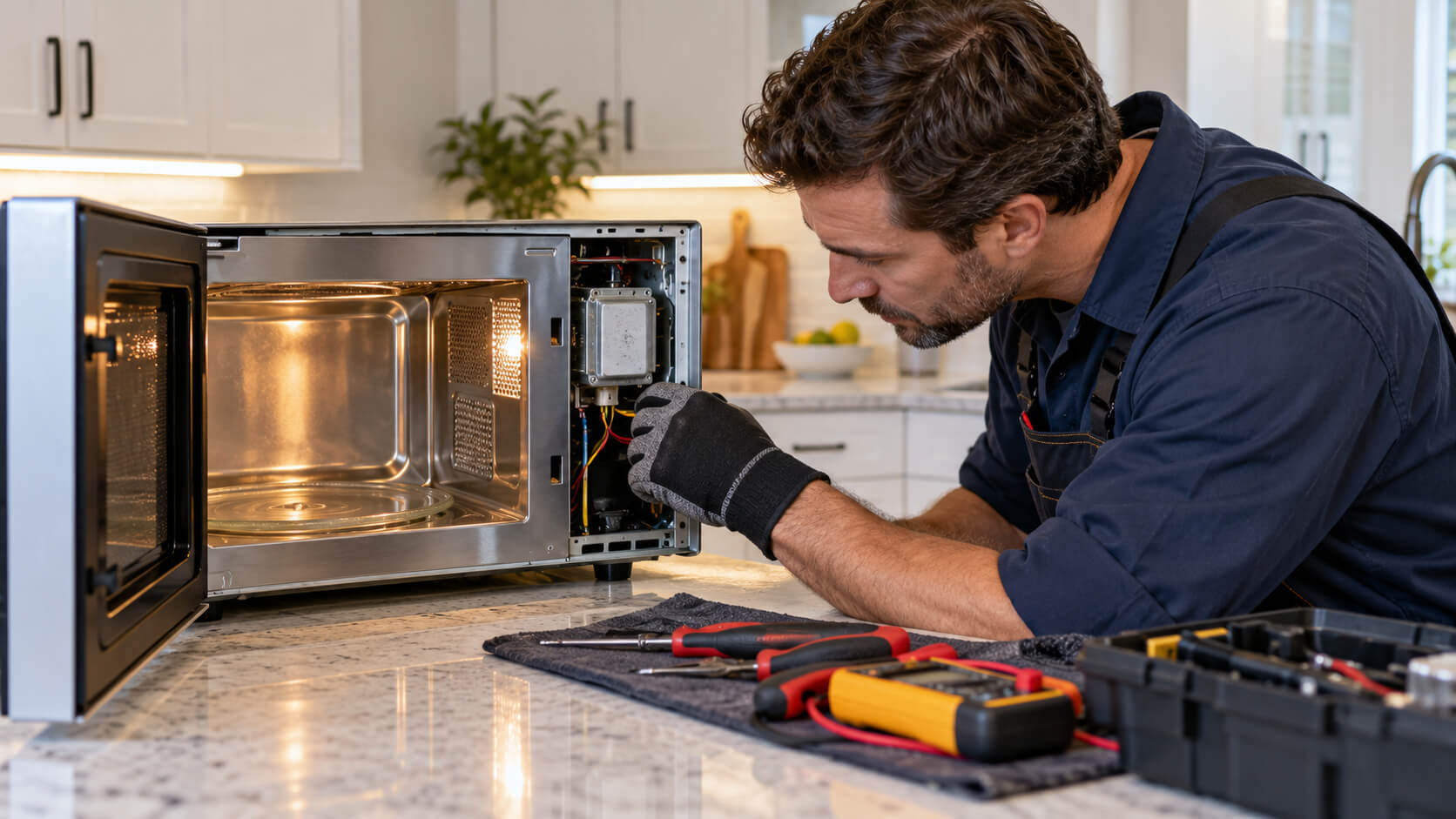
Professional microwave repair is recommended when sparking continues or the underlying cause cannot be identified through safe visual inspection. Repeated flashes from the same section of the cooking cavity may indicate a damaged waveguide cover or deteriorating interior surface. A persistent burning smell, visible scorching, or unusual crackling sounds can also suggest that internal components require attention. If the appliance sparks despite the absence of unsuitable cookware or visible food contamination, continued operation should be avoided. Internal electrical problems involving the magnetron, waveguide assembly, or associated components may require specialized diagnosis. These components are not suitable for routine household repair because microwave ovens contain potentially dangerous high-voltage circuits. Even after the appliance is unplugged, certain electrical components can retain enough energy to cause serious injury. A qualified appliance technician can inspect relevant components and determine whether replacement is necessary. Professional inspection is also advisable when the cooking cavity contains deep corrosion, holes, or extensive burn damage. In some circumstances, the condition and repair cost of the appliance may make replacement more practical than repair. A microwave with a damaged door, latch, or sealing surface should not be operated until it has been properly assessed. Addressing persistent sparking promptly helps reduce the risk of additional appliance damage and unsafe operation.