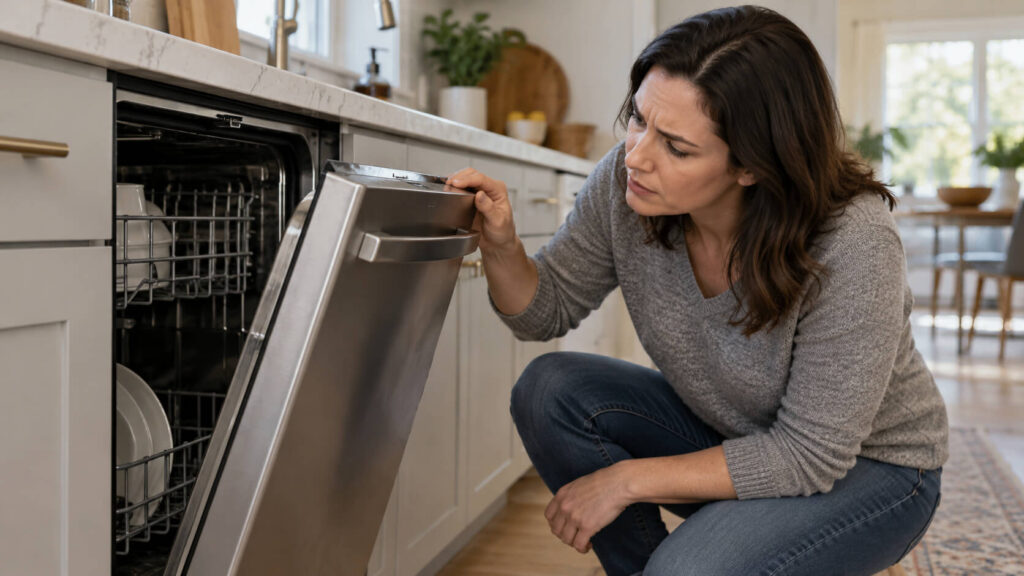
A dishwasher door that refuses to latch can quickly disrupt your kitchen routine. You load the dishes, add detergent, and prepare to start a wash cycle, only to discover that the door will not close securely. Sometimes the door appears shut but immediately pops open. In other cases, it closes normally, yet the dishwasher refuses to start. A dishwasher door not latching can result from several mechanical or electrical problems, including a damaged latch assembly, misaligned door, obstructed racks, or defective door switch. While some issues involve simple obstructions, others require component inspection or professional appliance repair. Understanding what prevents a dishwasher door from closing properly can help you identify the likely cause, avoid unnecessary damage, and determine when professional service is appropriate.
1. Broken or Worn Dishwasher Door Latch
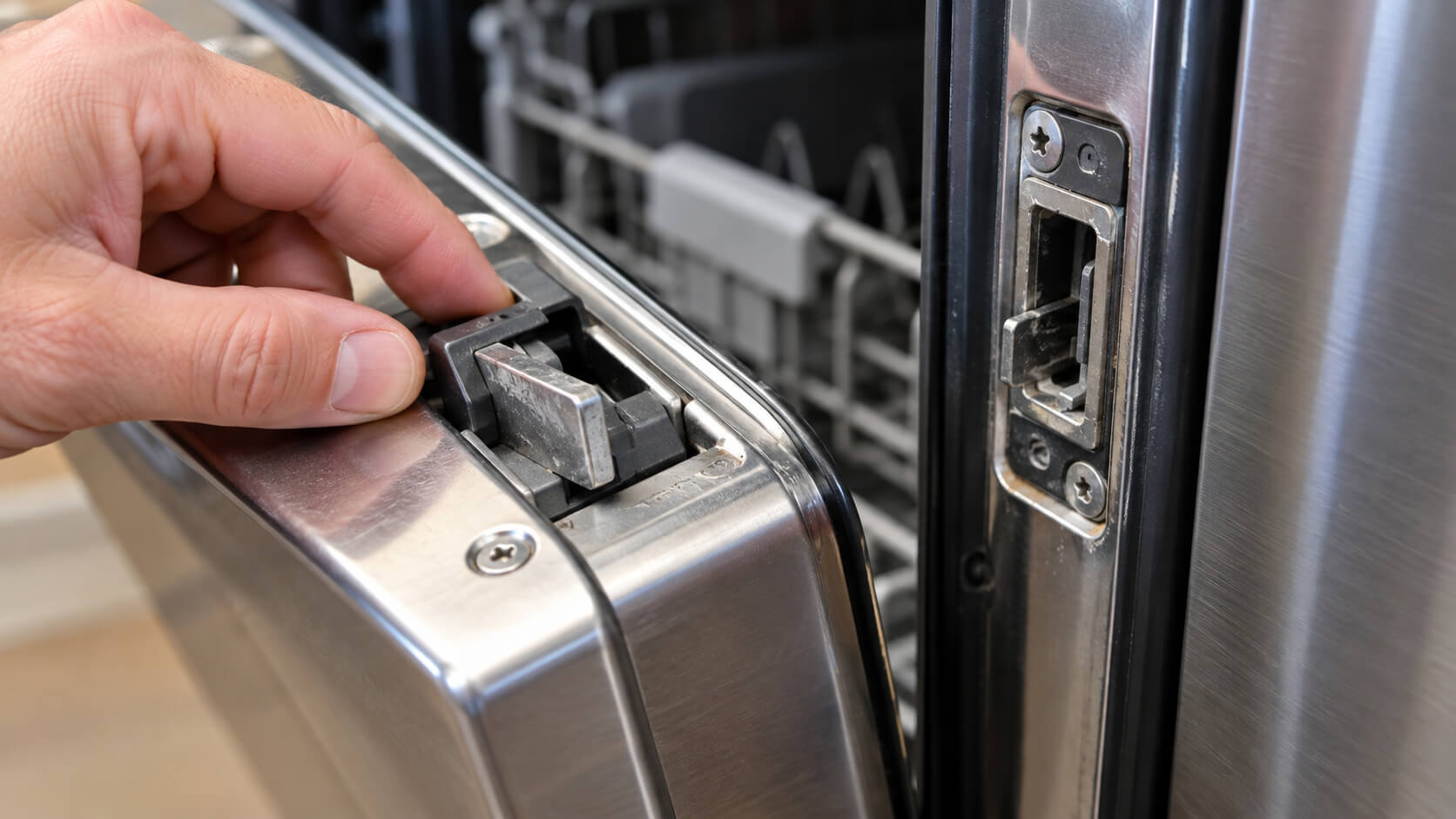
The dishwasher door latch is responsible for keeping the door securely closed during a wash cycle. When this component becomes damaged or worn, the door may fail to lock into position. A functioning latch engages with a corresponding strike to hold the door closed. Over time, repeated opening and closing can contribute to mechanical wear. Plastic components may crack, while metal parts can become bent or misaligned. One common symptom is a dishwasher door that closes but immediately springs back open. Another warning sign is having to push unusually hard to make the door latch. A loose or damaged latch may also prevent the dishwasher from recognizing that the door is closed. Inspect the visible latch components for cracks, deformation, or debris that could interfere with engagement. If the latch mechanism is physically damaged, replacing the appropriate component may be necessary.
The exact latch design varies between dishwasher manufacturers and models. Some appliances use an integrated latch and switch assembly, while others have separate components. A replacement part should always match the dishwasher’s model number. Avoid slamming the door because excessive force can damage the latch, strike, or surrounding door structure. If the latch appears intact but still fails to engage, the problem may involve alignment rather than a broken component.
2. Misaligned Dishwasher Door or Damaged Hinges
A misaligned dishwasher door can prevent the latch from connecting correctly with its strike. This problem may develop after installation, repeated mechanical stress, or damage to the door hinges. Even a relatively small alignment issue can interfere with the door’s closing movement. One side of the door may appear higher than the other, or the gap around the opening may look uneven. In some cases, the door rubs against the surrounding kitchen cabinets. A bent hinge can also prevent the door from moving smoothly into its closed position. Start by opening the dishwasher door and visually checking whether it sits evenly. Look for visible damage around the hinges and mounting points. If the door appears crooked, avoid forcing it into position. Continuing to operate a dishwasher with a misaligned door can contribute to sealing problems and water leaks. Incorrect dishwasher installation can create similar symptoms. An appliance that is not level or square within its cabinet opening may have difficulty closing correctly. Excessively tightened mounting hardware can sometimes distort the dishwasher frame. A qualified technician can determine whether the problem involves the hinges, mounting arrangement, or appliance leveling. Correcting the underlying alignment issue helps restore reliable door closure and proper gasket contact.
3. Dishwasher Racks or Dishes Blocking the Door
Sometimes a dishwasher door won’t close because an object inside the appliance is blocking its movement. Large plates, baking trays, and cooking utensils can extend beyond the edges of the dish racks. When these items protrude too far forward, they may prevent the door from reaching the latch. A utensil that has fallen through the lower rack can also interfere with rack movement. The upper rack may be responsible if it has not been pushed completely into the dishwasher. Some dishwashers feature height-adjustable upper racks that must be positioned evenly on both sides. An incorrectly adjusted rack may sit at an angle and prevent proper closure. Begin by checking whether both racks move smoothly along their tracks. Remove oversized items and reposition dishes that extend beyond the rack boundaries. Make sure the silverware basket and any removable rack components are correctly installed. After adjusting the dishes, push both racks fully toward the back of the appliance. Check that nothing is trapped between the door and the dishwasher tub. Try closing the door gently to determine whether the obstruction has been removed. If the door latches normally after rearranging the contents, an internal obstruction was likely responsible. Proper dishwasher loading can help prevent the same issue from recurring.
4. Damaged or Improperly Positioned Dishwasher Door Gasket
The dishwasher door gasket creates a seal between the door and the appliance tub. This flexible component helps prevent water from escaping during operation. If the gasket becomes displaced, damaged, or improperly installed, it may interfere with door closure. A section of rubber that has slipped out of its mounting channel can prevent the door from sitting flush. Food particles and accumulated debris around the sealing area may also obstruct the door. Inspect the gasket carefully for visible folds, tears, or sections that are not seated correctly. Pay particular attention to the corners and the areas where the gasket meets the tub. Remove loose debris using a soft cloth and a cleaning method recommended by the manufacturer. Avoid using sharp tools that could puncture or tear the rubber material. If the gasket is damaged or no longer fits securely, a compatible replacement may be required.
New dishwasher gaskets can sometimes feel unusually stiff. However, a door should never be forced shut against an obvious obstruction. If a newly installed gasket prevents the door from closing, verify that the correct part was installed and positioned according to the manufacturer’s instructions. A properly seated gasket supports both reliable closure and effective water sealing.
5. Dishwasher Door Spring or Tension Problems
Dishwasher door springs help control the movement and weight of the door as it opens and closes. Depending on the appliance design, springs may work with cables, hinges, or adjustable tension mechanisms. If the spring tension is incorrect, the door may feel unusually heavy or difficult to control. A door that drops open rapidly can indicate insufficient support from its balancing mechanism. Uneven spring tension may also cause the door to move differently on each side. These problems can sometimes accompany door alignment or latching difficulties. Check whether the door opens smoothly and remains balanced during normal movement. Listen for unusual mechanical noises when opening or closing the appliance. Inspect only the visible components that can be examined without removing protective panels. Avoid adjusting or disconnecting tensioned springs without following the manufacturer’s service instructions.
- Faulty Dishwasher Door Switch
A dishwasher door switch is an electrical safety component that helps the appliance determine whether its door is properly closed. On many models, the switch works together with the mechanical door latch. If the switch fails, the dishwasher may refuse to begin a wash cycle even when the door appears securely shut. This creates an important distinction between a mechanical latching problem and an electrical door-detection problem. A door that physically stays closed but triggers a door-open warning may indicate a switch or latch assembly issue. However, similar symptoms can also result from damaged wiring, poor latch engagement, or a control-related fault. Start by confirming that the door is actually engaging with its latch. Check for any visible obstruction preventing complete closure. Review the appliance’s display for warning messages or error indicators. Consult the owner’s manual to determine what those indicators mean.
Electrical testing may be required if the door closes correctly but the dishwasher still reports that it is open. Such testing should be performed only after the appliance has been disconnected from its electrical supply. Because dishwasher door switches may be integrated into other components, diagnosis requires knowledge of the specific model. A qualified appliance repair technician can test the switch and associated wiring. Replacing parts without confirming the fault may result in unnecessary repair costs. Never bypass a dishwasher door switch to make the appliance operate.
7. Dishwasher Installation or Leveling Issues
Incorrect installation is another potential reason a dishwasher door is not latching. The appliance must sit securely and evenly within its cabinet opening. If the dishwasher leans or its frame becomes distorted, the door may not align with the latch. This problem is particularly relevant when a dishwasher begins having closing difficulties immediately after installation. The door might rub against adjacent cabinets or make contact with mounting hardware. In some cases, the appliance may appear level from the front while its tub opening is not square. Improperly adjusted leveling legs can contribute to these conditions. Check for uneven gaps between the dishwasher and the surrounding cabinetry. Look for obvious interference when the door approaches its closed position. A spirit level can help identify basic installation problems, although manufacturer-specific measurements may also be necessary.
Dishwashers must be supported according to their installation instructions. Adjustments may involve leveling legs, mounting brackets, or the position of the appliance within the cabinet. These changes should not place stress on the water supply, electrical connection, or drain hose. If the problem appeared after kitchen remodeling or appliance installation, contact the installer for an inspection. Correct installation helps maintain proper door alignment, sealing, and long-term appliance performance.
How to Troubleshoot a Dishwasher Door That Won’t Latch?
Before scheduling dishwasher repair, several basic checks can help narrow down the cause. First, turn off the dishwasher and allow it to cool if it has recently operated. Disconnect electrical power before performing maintenance or inspecting components beyond ordinary loading areas. Remove dishes that may be extending beyond the racks. Push the upper and lower racks completely into their normal positions. Inspect the door opening for trapped utensils, food particles, or other obstructions. Examine the visible door gasket to ensure it is properly seated. Check whether the door looks straight and moves smoothly on its hinges. Look for visible damage to the latch and its corresponding strike. Close the door gently and listen for normal latch engagement.
If the door still refuses to close, avoid applying excessive pressure. A door that closes mechanically but does not allow the dishwasher to start may require a different diagnostic approach. Confirm that the appliance has power and that the control lock feature is not enabled. Some models also require the door to be closed within a specified period after pressing Start. Consult the manufacturer’s operating instructions for model-specific guidance. If the problem remains unresolved, professional diagnosis is the safest next step.
When Should You Call a Professional for Dishwasher Door Repair?
Not every dishwasher door problem requires professional service, but certain symptoms indicate that specialized diagnosis may be necessary. A visibly broken latch is one example. A door that hangs unevenly or has damaged hinges may also require repair. If the appliance repeatedly reports that its door is open despite closing securely, the switch or related electrical components may need testing. Water leaking around the door is another reason to stop using the dishwasher until the cause is identified. A technician can inspect the latch assembly, hinges, gasket, door switch, and installation alignment. Professional diagnosis helps distinguish between components that need replacement and those that only require adjustment. It also reduces the risk of damaging surrounding parts during disassembly. Dishwasher repairs involving electrical connections should be handled with appropriate safety precautions. Attempting to bypass safety mechanisms is never an acceptable repair method.
When arranging service, provide the dishwasher’s brand and model number. Describe whether the door refuses to close, pops open, or stays shut while the appliance fails to start. Mention any unusual noises, visible damage, or recent installation work. These details can help the technician prepare for the inspection. Addressing a faulty door mechanism promptly can prevent further inconvenience and potential water leakage.
How to Prevent Dishwasher Door Latch Problems?
Regular maintenance and careful handling can help reduce the likelihood of dishwasher door problems. Avoid slamming the door when closing the appliance. Arrange dishes so that plates, utensils, and cookware remain within the rack boundaries. Always push the racks fully into position before closing the door. Inspect the gasket periodically for accumulated debris or visible damage. Clean the sealing area according to the manufacturer’s recommendations. Avoid placing excessive weight on an open dishwasher door. Make sure children do not stand or sit on the door. Pay attention to changes in the way the door opens or closes. Unusual resistance, uneven movement, or repeated difficulty engaging the latch should be investigated before the problem becomes more severe.