
A washing machine that moves, shakes or vibrates excessively during operation can be frustrating and potentially damaging. While slight vibrations are normal, a washing machine that shifts across the floor or produces loud banging noises may indicate an underlying problem. Excessive washing machine movement during the spin cycle is often caused by an unbalanced laundry load, uneven leveling feet, improper installation, or worn suspension components. Sometimes the issue is easy to identify, while other cases require a closer inspection of the appliance’s internal parts. Understanding why your washing machine moves can help you recognize potential problems before they develop into more expensive repairs. Below are seven common causes of washing machine vibration, along with the warning signs and practical checks that can help identify the problem.
1. An Unbalanced Laundry Load
An unbalanced laundry load is one of the most common reasons a washing machine moves during the spin cycle. When clothing gathers on one side of the drum, the weight becomes unevenly distributed. As the drum rotates at high speeds, this imbalance creates additional vibration and movement. Heavy items such as towels, blankets, and jeans are particularly likely to cause uneven weight distribution. Washing a single large item can also make it difficult for the machine to maintain balance. The problem may become noticeable when the washer begins accelerating into its final spin cycle. You might hear repeated thumping sounds as the drum struggles to distribute the load evenly. Some modern washing machines automatically reduce their spinning speed when an imbalance is detected. If the machine begins shaking excessively, pause the cycle and wait until the drum stops completely. Redistribute the laundry evenly before restarting the appropriate spin program. Washing bulky items with other suitable garments, when permitted by the care instructions, can help maintain a more balanced load.
2. Overloading or Underloading the Washing Machine
Loading the washing machine incorrectly can contribute to excessive shaking and unstable operation. Overloading occurs when too many clothes are placed inside the drum, leaving insufficient space for proper movement. When laundry is tightly packed, items may not redistribute effectively during the spin cycle. This can create uneven forces that cause the appliance to vibrate or move across the floor. Overloading also places additional strain on the motor, suspension system, and other mechanical components. However, washing too few items can create similar problems. A single heavy towel or bath mat may absorb water and concentrate most of the load on one side of the drum. The machine may repeatedly attempt to balance the laundry before increasing its spin speed. Following the recommended washing machine load capacity helps prevent these conditions. Remember that maximum load limits can vary depending on the selected washing program and fabric type. Keeping an appropriate amount of space inside the drum allows clothes to move more freely and supports stable operation. If the washer frequently becomes unbalanced, adjusting the amount and combination of laundry may reduce excessive movement.
3. Uneven or Incorrectly Adjusted Leveling Feet
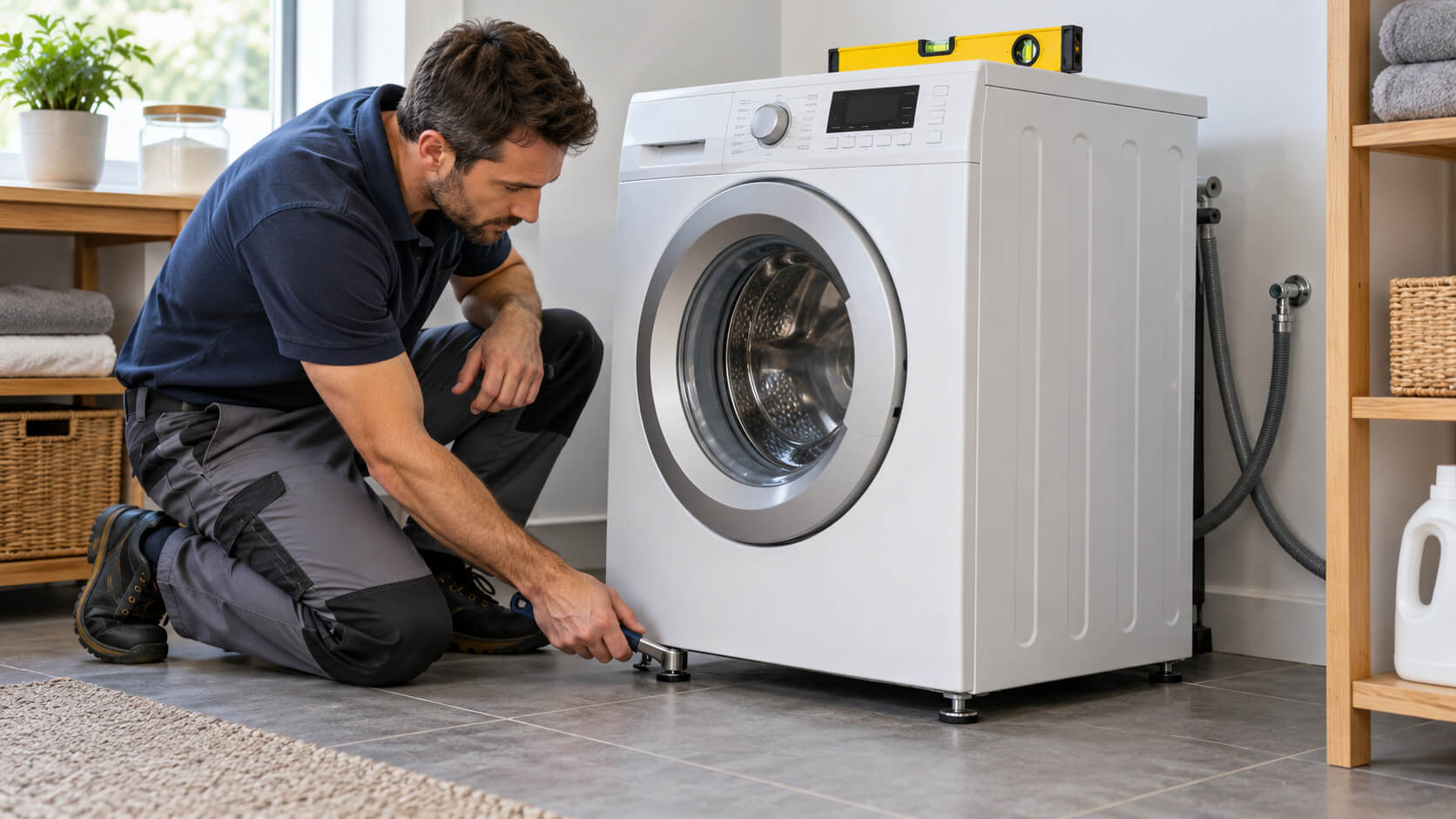
A washing machine must remain stable and properly leveled to operate efficiently. Most washing machines have adjustable leveling feet that help compensate for small differences in floor height. If one or more feet are not firmly touching the floor, the machine may rock during operation. This instability becomes more noticeable when the drum reaches higher spinning speeds. Even a small difference in height can increase vibration and cause the washing machine to move forward or sideways. The appliance may also produce knocking sounds as its weight shifts between the supporting feet. A spirit level can help determine whether the washing machine is positioned evenly from side to side and front to back. Gently checking for rocking while the machine is switched off can reveal unstable contact with the floor. The leveling feet should be adjusted according to the appliance’s installation instructions. Any locking nuts must also be secured to prevent the feet from changing position during operation. Proper leveling helps distribute the appliance’s weight evenly and reduces unnecessary vibration. If the washing machine continues moving despite being level, other installation or mechanical issues may be responsible.
4. An Unstable or Slippery Floor Surface
The surface beneath a washing machine plays an important role in its stability. Even a properly leveled appliance can experience excessive vibration when installed on an unsuitable floor. Flexible wooden floors may move slightly as the washer spins, increasing the vibration felt throughout the room. Soft flooring materials can also provide insufficient support for the appliance’s weight. Slippery surfaces, including certain smooth tiles, may allow a vibrating washing machine to shift gradually from its original position. This movement is sometimes described as a washing machine walking across the floor. Uneven flooring can make the problem worse by preventing the leveling feet from maintaining consistent contact. The appliance should ideally stand on a firm, stable, and level surface capable of supporting its operating weight. If the floor flexes noticeably, its stability may need to be assessed before the appliance is used regularly. Suitable anti-slip pads may help reduce movement on smooth surfaces when recommended for the specific machine. However, vibration pads cannot correct damaged suspension components or an unstable floor structure. Addressing the underlying flooring problem is important for maintaining safe and reliable washing machine operation.
5. Transportation Bolts Left in Place
Transportation bolts are designed to secure the washing machine’s internal tub during shipping and handling. These bolts prevent excessive movement of internal components while the appliance is being transported. However, they must be removed before operating applicable front-loading washing machines. When transportation bolts remain installed, the suspension system cannot move as intended. This restriction can transfer substantial vibration from the spinning drum directly to the appliance cabinet. As a result, a newly installed washing machine may shake violently, produce loud noises, or move across the floor. The problem often becomes apparent during the first wash or spin cycle. If a new washing machine vibrates excessively, checking whether the transportation bolts were removed is an important troubleshooting step. These bolts are typically located on the rear of the appliance, although their number and arrangement vary by model. Installation instructions should be followed carefully when removing them. The bolts should be stored safely because they may be needed if the appliance is transported again. Continuing to operate a washing machine with transportation bolts installed can damage internal components and should be avoided.
6. Worn or Damaged Shock Absorbers
Shock absorbers help control the movement of the washing machine’s tub during operation. They are commonly used in front-loading washing machines to reduce excessive bouncing and vibration. As the drum spins, the shock absorbers help dampen movement generated by changing laundry loads. Over time, these components may become worn, loose, or damaged. When shock absorbers lose their effectiveness, the tub can move more aggressively within the appliance cabinet. This may cause the washing machine to shake heavily, particularly during high-speed spinning. Loud knocking or banging noises may occur when excessive tub movement causes internal components to make contact. Unlike an unbalanced laundry load, worn shock absorbers may produce recurring symptoms across multiple wash cycles. The problem may also continue after the machine has been correctly leveled and loaded. A visual inspection by a qualified technician can help determine whether the shock absorbers are leaking, detached, or mechanically worn. Damaged shock absorbers generally require replacement with compatible parts. Timely washing machine repair can help prevent additional strain on the suspension system and surrounding components.
7. Damaged Suspension Springs or Rods
The washing machine suspension system helps support the tub and control movement during washing and spinning. Depending on the appliance design, this system may include suspension springs, support rods, dampers, and other stabilizing components. These parts work together to keep the tub properly positioned while allowing controlled movement. When a suspension spring breaks or a support rod becomes worn, the tub may no longer remain correctly supported. This can lead to excessive shaking, uneven drum movement, or repeated banging noises. In some cases, the inner tub may appear tilted or sit unusually low inside the appliance. Suspension problems may develop gradually as components wear through repeated use. However, sudden mechanical damage can also cause an immediate increase in vibration. A washing machine with damaged suspension components may move even when the laundry load is balanced and the appliance is properly leveled. Because suspension systems contain heavy and sometimes tensioned components, internal inspection should be performed with appropriate precautions. Replacing damaged parts can restore proper tub support and improve spinning stability. If the washer continues shaking after basic troubleshooting, professional inspection of the suspension system is recommended.
How to Identify the Cause of Excessive Washing Machine Movement?
Identifying the reason a washing machine moves begins with observing when the problem occurs. If shaking happens only while washing blankets or heavy clothing, an unbalanced laundry load may be responsible. When movement occurs during nearly every spin cycle, the leveling feet, floor stability, and internal suspension deserve closer attention. A newly installed washing machine that shakes violently should be checked for transportation bolts left in place. Before inspecting the appliance, stop the cycle and wait for the drum to come to a complete stop. Check whether the machine stands evenly and whether all four feet maintain firm contact with the floor. Examine the surrounding area for signs of sliding, rocking, or contact with nearby cabinets. Listen for unusual knocking, scraping, or grinding sounds that may indicate mechanical problems. A deep rumbling noise that increases with drum speed can sometimes point to worn drum bearings rather than a simple balance issue. If the washing machine moves even with properly distributed loads, avoid repeatedly operating it at high spin speeds. Professional diagnosis may be necessary to identify worn shock absorbers, damaged suspension parts, or other internal faults.
How to Prevent a Washing Machine From Moving?
Regular maintenance and correct washing habits can help minimize excessive washing machine vibration. Begin by installing the appliance on a stable surface and ensuring the leveling feet are adjusted correctly. Check the machine’s position periodically, especially if it has recently been moved or the floor has changed. Avoid overloading the drum and follow the recommended capacity for each washing program. Distribute heavy garments evenly instead of washing a single bulky item whenever possible. Select an appropriate spin speed for delicate, heavy, or unusual laundry loads. Lower spin speeds may reduce vibration when recommended for a particular fabric or cycle. Keep the area around the washing machine clear so that excessive movement can be identified easily. Pay attention to unusual noises because repeated knocking or scraping may indicate developing mechanical wear. If the machine begins moving more than usual, investigate the cause rather than allowing the problem to continue. A properly maintained washing machine should remain stable during normal operation, although some vibration is expected. Addressing small installation and loading problems early can reduce the likelihood of unnecessary appliance repairs.