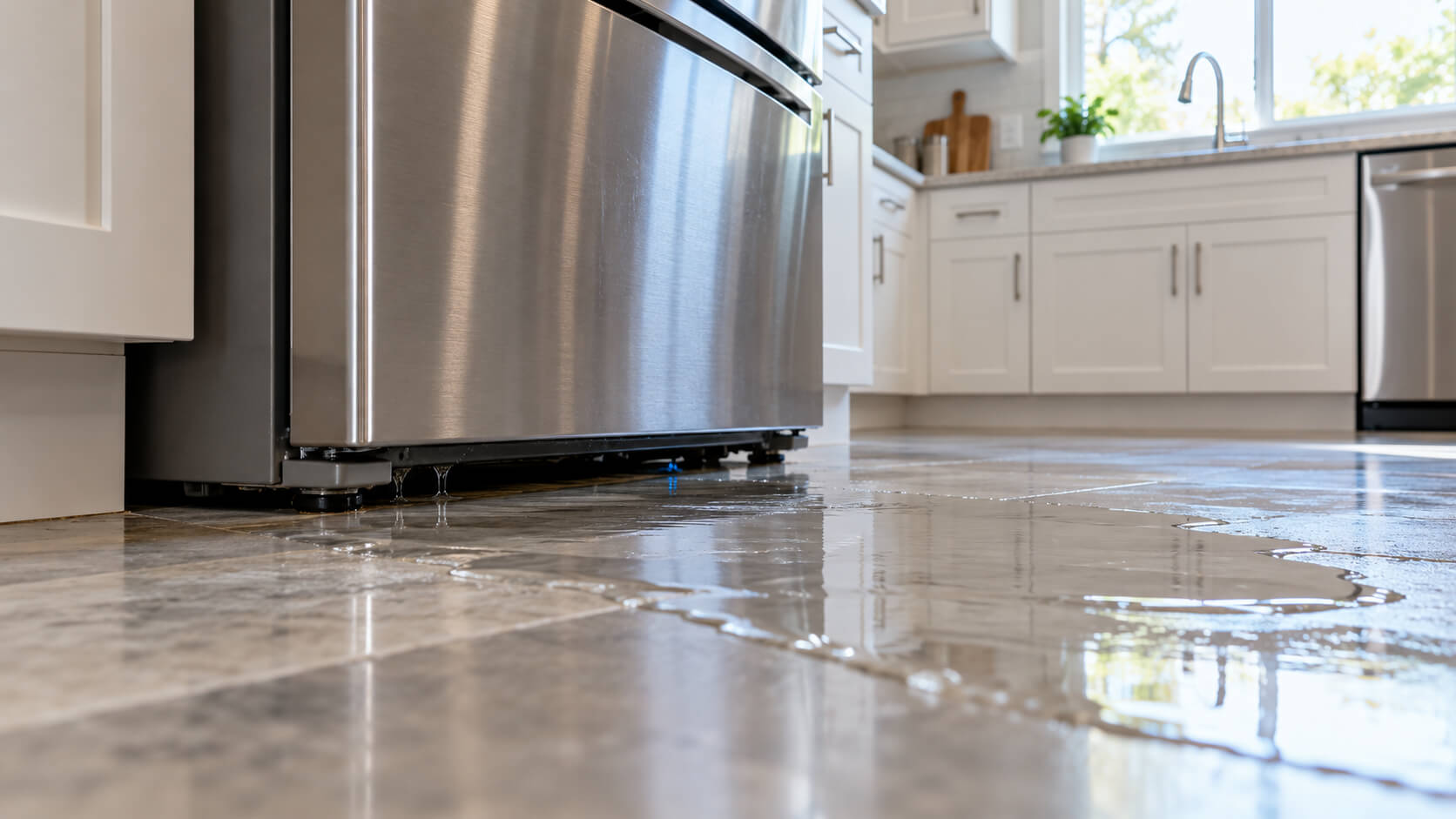
Discovering a puddle beneath your refrigerator can be alarming, especially when the source of the water is not immediately visible. A refrigerator leaking water may indicate a minor maintenance issue, but it can also signal a damaged water supply line, blocked defrost drain, or malfunctioning internal component. Ignoring the problem can lead to damaged flooring, mold growth, and potentially hazardous electrical conditions. Fortunately, many refrigerator water leaks have recognizable symptoms that help narrow down the possible causes. Water collecting beneath the crisper drawers often points toward a different problem than water dripping behind the appliance. Similarly, a refrigerator leaking from the bottom may have a drainage issue, while moisture near the dispenser could indicate a filter or water connection problem. The first step is to identify where the water is coming from before attempting any repairs. Some issues can be corrected through routine cleaning, proper installation, or simple adjustments. Others require professional refrigerator repair to prevent recurring leaks and additional damage. This guide explains why your refrigerator is leaking water, what you should check first, and how to determine the safest next steps.
What Should You Do First When Your Refrigerator Is Leaking Water?
The first priority when discovering a refrigerator water leak is to prevent further damage and identify any immediate safety concerns. Start by checking whether water is spreading toward electrical outlets, power cords, or nearby appliances. If the area around the refrigerator is wet, avoid touching electrical connections or standing in water while attempting to disconnect the appliance. If necessary, shut off electricity at the circuit breaker before approaching the affected area. When it is safe, unplug the refrigerator before performing maintenance or inspecting accessible components. If your refrigerator has a water dispenser or ice maker, locate the household water shutoff valve and close it if a supply-line leak is suspected. Use towels to absorb standing water and prevent moisture from spreading beneath cabinets or flooring. Check whether the water is coming from the appliance itself or from nearby plumbing, such as a sink connection. Before moving the refrigerator, confirm that its water supply tubing and power cord have enough clearance to avoid damage. If the appliance must remain unplugged for an extended period, protect perishable food by transferring it to another refrigerator or an insulated cooler with ice. A refrigerator normally keeps food safe for approximately four hours during a power outage when the doors remain closed. Taking these initial precautions allows you to investigate the refrigerator leak without unnecessarily increasing electrical, property, or food safety risks.
How Can You Identify Where the Refrigerator Water Leak Is Coming From?
Finding the exact location of a refrigerator water leak is often more useful than immediately attempting to replace individual components. Begin by examining the floor around the appliance to determine where moisture first appears. Water underneath the front of the refrigerator may originate from an overflowing defrost drain system or an internal leak that reaches the door opening. A puddle behind the appliance is more likely to involve the household water supply line or its connections. If moisture collects beneath the vegetable drawers, the defrost drainage system should be investigated. Water dripping around the filter compartment may indicate an incorrectly installed filter or damaged housing. Leaks near the ice dispenser can originate from melting ice, trapped air in the water line, or a faulty dispenser component. Also examine nearby plumbing because water from a sink or another appliance can travel across the floor and appear to originate from the refrigerator. After safely drying the surrounding area, observe where moisture reappears without operating equipment that presents an electrical hazard. Take note of whether the leak occurs continuously, after an ice-making cycle, or only when someone uses the dispenser. These observations can help distinguish a pressurized water leak from condensation or defrost drainage problems. Identifying the location and timing of the leak makes subsequent refrigerator troubleshooting more accurate and efficient.
Why Is Water Pooling Under the Refrigerator Crisper Drawers?
Water collecting beneath the crisper drawers is a common symptom of a blocked or frozen defrost drain. Most frost-free refrigerators use an automatic defrost system to remove frost from the evaporator coils. During this process, melted frost flows through a drain tube into a collection pan beneath the appliance. If the drain becomes blocked by ice, food particles, or debris, the water cannot escape normally. Instead, moisture may accumulate inside the refrigerator compartment or freeze along the bottom of the freezer. As additional defrost cycles occur, the collected water can eventually flow onto the kitchen floor. One warning sign is repeated puddling beneath the vegetable drawers even after the water has been cleaned up. To investigate, unplug the refrigerator and consult its owner’s manual to locate the drainage system. Some models provide access to the drain opening for basic cleaning, while others require partial disassembly by a technician. If manufacturer instructions permit cleaning, use only the recommended tools and methods to clear accessible debris or ice. Avoid sharp objects, boiling water, or excessive force because these can damage plastic components and drainage tubing. If the drain repeatedly freezes or remains blocked, professional refrigerator repair may be necessary to identify and correct the underlying problem.
Why Is Your Refrigerator Leaking Water From the Back or Bottom?
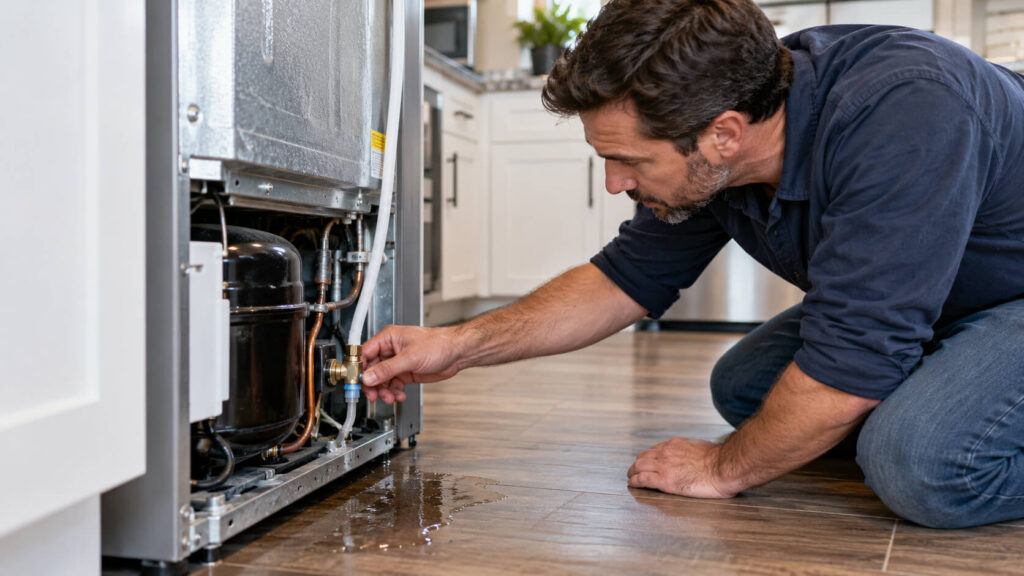
A refrigerator leaking water from the back or bottom may have a damaged supply line, loose connection, or drainage problem. Refrigerators equipped with water dispensers and automatic ice makers usually connect to a pressurized household water supply. This supply passes through flexible tubing and fittings before reaching the refrigerator’s internal components. Over time, tubing can become cracked, kinked, or damaged, particularly when the appliance is moved. Loose connections may also allow small amounts of water to escape continuously. If water is accumulating behind your refrigerator, inspecting the visible supply connections is an important troubleshooting step. First, shut off the refrigerator’s water supply and disconnect the appliance from electricity when it is safe to do so. Carefully examine accessible tubing for moisture, cracks, or damaged fittings without pulling the refrigerator excessively. A damaged water line should be replaced with a compatible component rather than temporarily sealed with tape. However, water underneath the refrigerator does not always originate from its plumbing system. A cracked drain pan or overflowing defrost system may produce similar symptoms. If the source cannot be identified through a safe external inspection, a qualified technician or plumber should investigate the leak before the water supply is restored.
Can a Water Filter or Dispenser Cause Refrigerator Leaks?
A refrigerator water filter can develop leaks when its cartridge is damaged, incorrectly positioned, or incompatible with the appliance. Many modern refrigerators contain a replaceable filter connected to the internal water supply. If the cartridge does not lock into its housing correctly, water may escape around the connection. Damaged O-rings can also prevent the filter from creating a watertight seal. Homeowners sometimes notice these problems immediately after installing a replacement water filter. Water may drip onto nearby shelves or collect beneath the filter compartment. If the leak started after a filter replacement, shut off the water supply and review the manufacturer’s installation instructions. Check the cartridge and accessible seals for visible cracks, damage, or incorrect positioning. Reinstall or replace the filter only with a manufacturer-approved compatible component. A damaged filter housing requires professional inspection because replacing the cartridge alone may not resolve the leak. Occasional dispenser dripping can also result from air trapped in the water line, particularly after a filter change. If the dispenser continues dripping after the manufacturer’s recommended flushing procedure, further diagnosis may be needed.
Why Is Water Leaking From the Ice Maker?
An automatic ice maker can contribute to refrigerator water leaks when its fill system or associated components malfunction. The ice maker receives water through a tube connected to an electrically controlled inlet valve. During normal operation, the valve opens briefly to supply the amount of water needed for ice production. If the valve fails to close correctly, excess water may enter the ice maker or escape through nearby connections. A damaged fill tube can also allow water to drip into unintended areas of the freezer. In some cases, you may notice unusual ice buildup around the ice maker or water collecting beneath the ice bin. Ice that melts because of temperature problems or an improperly closed ice compartment can create similar symptoms. Start by checking the ice bin and accessible surrounding surfaces for accumulated ice or visible moisture. If a water connection is suspected, turn off the ice maker and close the water supply valve according to the manufacturer’s instructions. Do not attempt to disassemble electrical valves or inaccessible internal components yourself. A technician can inspect the inlet valve, fill tube, and water connections to determine which component is responsible. Promptly addressing the problem helps prevent recurring leaks and unnecessary ice accumulation.
Can Damaged Door Seals or Incorrect Leveling Cause Water Leaks?
Not every refrigerator water leak is caused by a damaged pipe or drainage system. Sometimes moisture accumulates because warm, humid air is entering the refrigerated compartments. The rubber gasket surrounding each refrigerator door helps prevent outside air from entering when the door is closed. If the gasket becomes dirty, cracked, loose, or deformed, it may no longer provide an effective seal. This allows additional moisture to enter and can produce condensation on interior surfaces. In freezer compartments, excess moisture can contribute to frost buildup that eventually melts. Incorrect refrigerator leveling may also prevent doors from closing properly or affect drainage in certain models. Begin by checking that containers, drawers, and shelves are not obstructing the doors. Inspect the gasket for visible damage and clean it with a soft cloth and mild detergent. You can also use the manufacturer’s recommended door-seal test to determine whether the gasket is sealing correctly. Check the refrigerator’s alignment with a level and adjust its feet according to the model-specific installation instructions. If condensation persists despite proper door closure and leveling, the gasket or another component may require professional attention.
What Happens When the Refrigerator Drain Pan Is Cracked or Overflowing?
The refrigerator drain pan collects water produced during the automatic defrost cycle. On many refrigerator models, this shallow container is located near the bottom of the appliance. Water reaching the pan normally evaporates through heat and airflow around the refrigerator’s operating components. However, a cracked or incorrectly positioned pan may allow collected water to reach the floor. An overflowing drain pan can also create puddles beneath the refrigerator. Excess water accumulation may indicate an unusual drainage or condensation problem rather than a defective pan alone. If the leak appears beneath the appliance, consult the owner’s manual to determine whether the collection pan is accessible. Disconnect the refrigerator from electricity before inspecting any removable lower components. Look for visible cracks, standing water, or evidence that the pan has shifted from its correct position. Avoid removing fixed electrical panels or disturbing wiring and refrigeration components during inspection. If the pan is damaged, it may need to be replaced with a compatible part. Repeated overflowing or persistent leakage should be investigated professionally to identify why the water is accumulating.
What Should You Check Before Calling a Refrigerator Repair Technician?
Basic refrigerator leak troubleshooting can help identify minor problems before professional service becomes necessary. Begin by confirming that the appliance is receiving proper cooling and that its doors close securely. Check the location of the water and whether the leak appears continuously or only during certain operations. Examine accessible water supply lines and fittings after shutting off the relevant water valve. If the refrigerator has a dispenser, inspect the water filter installation and check for visible moisture around its housing. Look beneath the crisper drawers for evidence of pooling water or ice. Inspect the door gaskets for food debris, damage, and gaps that could allow humid air to enter. Make sure shelves and food containers are not preventing the doors from closing. Confirm that the refrigerator is positioned according to the manufacturer’s leveling requirements. Clean up standing water and document where moisture reappears after any safe corrective action. Avoid removing protective panels, testing electrical valves, or dismantling the refrigeration system without appropriate training. If these checks do not reveal an easily corrected problem, arrange professional refrigerator repair rather than allowing the leak to continue.
When Should You Call a Professional for a Leaking Refrigerator?
Professional refrigerator repair is recommended when the leak involves damaged internal components, inaccessible drainage systems, or uncertain electrical conditions. A continuously leaking supply line or faulty water inlet valve requires prompt attention because pressurized water can cause significant property damage. Persistent water accumulation beneath the crisper drawers may indicate a blockage that cannot be accessed safely. A damaged filter housing or internal water reservoir may also require specialized replacement parts. If the refrigerator is no longer maintaining a safe temperature, food preservation becomes an additional concern. Refrigerated food should generally remain at 40°F (4°C) or below to limit food safety risks. Perishable foods held above that temperature for more than two hours should be discarded according to USDA guidance. A technician can inspect the appliance, determine the underlying cause, and recommend appropriate repairs. Professional evaluation is particularly useful when several possible faults produce similar symptoms. Repairing the actual source of the leak is more effective than repeatedly removing water from the floor. If water has reached electrical components or the surrounding outlet, do not restore power until the area has been assessed and is safe. Timely professional assistance can help prevent recurring leaks, appliance damage, and more expensive repairs.
How Can You Prevent Refrigerator Water Leaks in the Future?
Preventive maintenance can reduce the likelihood of many common refrigerator water leaks. Regularly inspect the refrigerator’s visible water supply connections for moisture, wear, or physical damage. Replace water filters according to the manufacturer’s recommended schedule and installation instructions. After installing a new filter, check the surrounding area for signs of leakage. Keep refrigerator shelves and storage compartments clean to prevent spills from being mistaken for internal leaks. Avoid placing food containers where they prevent doors from closing properly. Clean the rubber door gaskets periodically so they continue forming an effective seal. Check that the refrigerator remains correctly leveled, especially after moving it for cleaning or maintenance. Avoid blocking accessible drainage openings with food or packaging. If your model allows user maintenance of the defrost drainage system, follow the manufacturer’s approved cleaning procedures. Pay attention to new frost buildup, unexplained condensation, or recurring puddles because these may indicate developing problems. Consistent maintenance and early troubleshooting can help protect your kitchen and support reliable refrigerator performance.