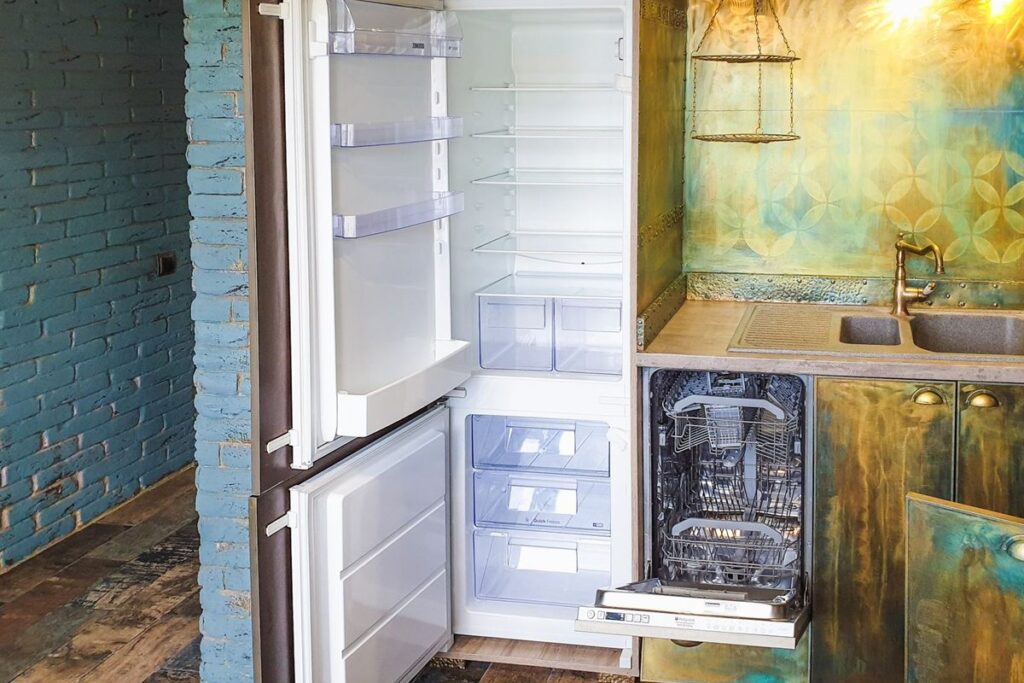
A refrigerator that isn’t cooling usually has either an airflow problem (a wrong setting, a leaky door seal, blocked vents or dirty condenser coils) or a failed part. If the freezer is still cold but the fridge is warm, the likely culprit is the path that carries cold air from the freezer, most often the evaporator fan or a frosted-over coil. Protect your food, run the safe checks below, and call a technician when the evidence points to a fan, the defrost system or the sealed refrigerant system.
In this guide:
- Protecting your food
- How a fridge moves cold air
- Eight safe checks, in order
- Symptoms and likely causes at a glance
- Fridges in cold garages
- When to call a technician and what affects the cost
- Common mistakes and FAQ
First, protect your food
Health Canada’s “Safe food storage” page (2024) recommends keeping the fridge at 4 °C (40 °F) or lower and the freezer at −18 °C (0 °F) or lower; between 4 °C and 60 °C, bacteria grow quickly. The number on the dial is a setting, not a temperature, so put an appliance thermometer on the middle shelf.
The Government of Canada page “Food and drinking water safety in an emergency” (2026), written for power outages, says an unopened fridge keeps food cold for about 4 hours, a full freezer keeps food frozen for about 48 hours and a half-full one for about 24. It also says to throw away food that has been at room temperature for 2 hours or more. If your fridge reads above 4 °C, move perishables to a cooler with ice packs or into a still-cold freezer.
How a fridge moves cold air
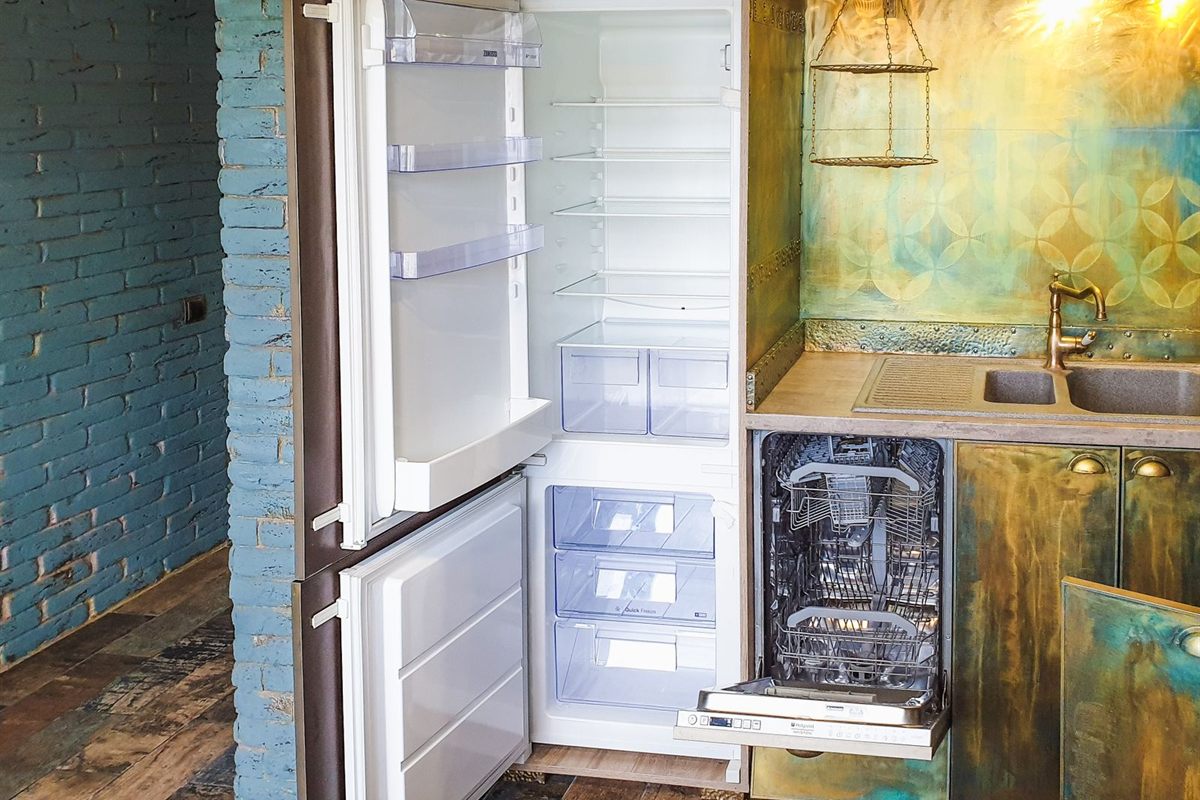
A fridge moves heat out rather than making cold. The compressor pumps refrigerant through a sealed loop; the refrigerant absorbs heat at the evaporator coil, usually behind the freezer’s back panel, and releases it through the condenser coils under or behind the cabinet.
In many frost-free models, an evaporator fan blows air across the freezer coil and sends part of it into the fresh-food section through vents and a flap called a damper. A defrost heater periodically melts frost off the coil. So when the freezer is cold but the fridge is warm, cold air is being made but not delivered: suspect the fan, a frost-blocked coil, a stuck damper or blocked vents. (Some models have a separate evaporator for each section.)
Eight safe checks, in order
Start with the simplest causes. Unplug the fridge or switch off its breaker before removing any grille or panel.
- Confirm power and mode. No light or sound? Check the plug and breaker; Whirlpool’s installation instructions call for a grounded outlet and no extension cord. Lights on but nothing cooling? Whirlpool’s support article “Not Cooling – Refrigerator Section” (North America, viewed 2026) says demo mode keeps the lights on while neither section cools, and Samsung’s US guide “Cooling issues with Samsung refrigerator or freezer” (viewed 2026) says “OF OF” on the display means Cooling Off mode.
- Check the controls. Dials and buttons are easy to bump. Change one step at a time; Samsung says a fridge can take up to 28 hours to reach a new setting. Verify with a thermometer in a glass of water.
- Test the door seals. Close a paper bill in the door at several points and pull it out. Samsung recommends this test: if the bill slides out easily, clean the gasket (the rubber seal) with mild dish soap and a damp cloth, and replace it if it’s torn. Make sure nothing is holding a door ajar.
- Clear the vents. Samsung suggests keeping food about 5 cm (2 in.) from interior vents; move tall containers forward.
- Clean the condenser coils if your model needs it. GE’s article “Refrigerator – Cleaning Condenser Coils” (US, viewed 2026) says most of its models made since 2001 don’t need cleaning, while Whirlpool suggests checking every 3 to 6 months in homes with pets or heavy dust. Unplug, remove the base grille, and use a soft brush or vacuum without bending fins or tubing.
- Allow clearance. GE’s article “Refrigerator – Not Cooling Enough” (US, viewed 2026) asks for at least 2.5 cm (1 in.) at the sides, top and back; Samsung asks for 5 cm (2 in.). Keep the fridge away from ovens and heat registers.
- Listen for the evaporator fan. Open the freezer and listen behind the back panel. On many models the fan pauses when the door opens, and pressing the door switch restarts it. Silence or grinding points to the fan motor.
- Look for heavy frost. A thick layer across the freezer’s back panel suggests a defrost failure. To clear it, unplug and empty the fridge and let the ice melt with the doors open and towels down. If the frost returns within days or weeks, a defrost part has likely failed.
How to tell it worked: Whirlpool and GE allow about 24 hours for a newly installed fridge to reach temperature, so give yours a full day after any change or restart. It should then read 4 °C or lower in the fridge and about −18 °C in the freezer.
Symptoms and likely causes at a glance
| Symptom | Likely cause | DIY check | Call a technician when |
|---|---|---|---|
| No light, no sound | No power | Breaker; test the outlet with a lamp | Outlet works, fridge stays dead |
| Lights on, nothing cold, display shows “OF OF” or similar | Demo or cooling-off mode | Exit the mode using the manual | The mode won’t clear or an error code appears |
| Both sections slightly warm | Setting, door seal, dirty coils, tight clearance | Thermometer, bill test, coils, 24-hour wait | Still above 4 °C after the checks |
| Freezer cold, fridge warm, no fan sound | Evaporator fan motor | Listen with the door switch pressed | The fan is silent or noisy |
| Freezer cold, fridge warm, frost on back wall | Defrost system failure | Manual defrost as a stopgap | The frost returns |
| Freezer thawing in winter, unit in garage | Room too cold for the model | Check the operating range | Rarely; relocate or use a garage-rated model |
| Compressor clicks or runs non-stop; coils clean; both warm | Compressor, start part or refrigerant leak | None beyond basic checks | Right away |
Fridges in cold garages: an Edmonton winter problem
Whirlpool’s “Not Cooling” article says its refrigerators are intended for rooms between 13 °C (55 °F) and 43 °C (110 °F); GE gives a lower limit of about 16 °C (60 °F). Whirlpool’s article “How Garage-Ready Refrigerators Work” (viewed 2026) explains why: in cold weather a standard unit may cycle less or not at all because the surroundings mask the need for cooling, so the freezer can warm and thaw. An unheated garage in winter is far colder than that, and no repair changes it. Move the fridge indoors or choose a garage-rated model.
When to call a technician
Book a repair if, after the checks above:
- The evaporator fan is silent, squealing or grinding.
- Frost returns after a full manual defrost.
- The compressor clicks on and off, hums without starting, or runs constantly while the fridge warms.
- The fridge is still above 4 °C a full day after you fixed settings, seals, vents and coils.
The sealed system (compressor, coils and refrigerant lines) is not a DIY job. In Canada, refrigerant handling is regulated provincially and, for federally regulated equipment, federally. Environment and Climate Change Canada’s “Federal Halocarbon Regulations information” page (2024) says only certified persons who have completed an environmental awareness course on refrigerant handling may service those systems. In Alberta, the provincial Ozone-depleting Substances and Halocarbons Regulation also governs how these refrigerants are handled and released. Many newer fridges also use isobutane (R-600a), a flammable refrigerant.

Have the model number, the symptoms and your checks ready when you call. A technician from our refrigerator repair service will explain the problem and give a clear estimate before work begins.
What affects the repair cost
- Which part failed. A fan or defrost part is a contained repair; sealed-system work needs more labour and certified refrigerant handling.
- Parts availability for your brand and model.
- Access, since built-in units take longer to reach.
- Age and condition. For an older fridge with a sealed-system fault, our guide on whether to repair or replace an appliance helps you weigh it up.
Common mistakes to avoid
- Turning the control to the coldest setting. Food near the vents may freeze, and a failed fan or defrost system still isn’t fixed. Reset it and find the cause.
- Chipping ice with a knife or using a hair dryer. A punctured coil leaks refrigerant, and a hair dryer near meltwater is a shock hazard. Unplug and let the ice melt on its own.
- Judging a fix after an hour. You may undo a correct adjustment. Wait a full day, then measure.
After the fix: keeping it cold
Leave the thermometer in and check it weekly, wipe the gaskets when you clean the shelves, and keep vents clear. Small habits help other appliances too; a clogged filter, for example, often explains a dishwasher not draining.
Frequently asked questions
Why is my freezer cold but my fridge warm?
In many fridges, the fresh-food section gets its cold air from the freezer. A failed evaporator fan, a frost-blocked coil, a stuck damper or blocked vents can stop that air.
What temperature should my fridge be in Canada?
Health Canada recommends 4 °C (40 °F) or lower for the fridge and −18 °C (0 °F) or lower for the freezer. Confirm with a thermometer.
How long does a fridge take to get cold again?
Whirlpool and GE allow about 24 hours after installation, and Samsung’s US guide says up to 28 hours after a setting change.
How long is food safe if my fridge stops cooling?
Government of Canada emergency guidance says an unopened fridge keeps food cold for about 4 hours. Discard food that has been at room temperature for 2 hours or more.
Why is my fridge running but not cooling?
Rule out demo mode, dirty coils and tight clearance first. If the compressor still runs constantly with a warm cabinet, the fault may be in the sealed system.
Will my fridge work in an unheated garage in winter?
A standard model often won’t, because a cold room can stop the compressor from running enough to keep the freezer frozen. Look for a garage-rated model.
Can I add refrigerant to my fridge myself?
No. Low refrigerant means there is a leak, and refrigerant work is regulated in Canada and in Alberta. A qualified technician has to find and repair the leak before the system is recharged.
Is it worth repairing a fridge that won’t cool?
Often, when the fault is a fan, defrost part or control. A sealed-system repair on an older fridge deserves a closer look at its age and condition.
The bottom line
Most cooling problems can be narrowed down in an afternoon: check power and mode, settings, seals, vents and coils, then give the fridge a full day. If the freezer is cold but the fridge stays warm after that, the evaporator fan or defrost system is the likely cause, and any refrigerant problem needs a qualified technician.
If you’re in Edmonton, Sherwood Park, Spruce Grove or Acheson, you can book a refrigerator repair visit online or call +1 (587) 501-7136. Dr. Appliance Fix offers same-day or flexible appointments, including Sundays, and many repairs are completed in the same visit, depending on the issue and parts availability.