If your electric dryer tumbles but the clothes come out cold or damp, the cause is usually a breaker that has only half tripped, airflow blocked by lint, snow or a crushed duct, or a failed heating part such as the thermal fuse or heating element. You can check the first two yourself without tools. A failed part usually needs a technician to test it, replace it and find out why it failed.
In this guide:
- How an electric dryer makes heat
- Safe checks to do first
- Winter vent problems
- Parts that fail, and why
- Symptoms and causes table
- Mistakes, when to call, and testing after a fix
- Frequently asked questions
How an electric dryer makes heat
An electric dryer pulls in room air, heats it over a heating element (a coil of resistance wire), pushes it through the tumbling clothes, and blows the damp air out through the lint screen and vent. Heat and airflow work as a pair: without enough airflow, the dryer overheats and its safety parts cut the heat.
- Cycling thermostat or thermistor: switches the element on and off to hold the heat level you chose. Many newer models use a thermistor (temperature sensor) instead.
- High-limit thermostat: a backup switch that cuts the element if the temperature climbs too high.
- Thermal fuse: a one-time safety device that opens if the dryer overheats. It cannot be reset. Depending on the model, a blown fuse cuts the heat only or stops the dryer completely.
- Moisture sensor: metal bars in the drum that end sensor-dry cycles when the load reads dry.
The element needs 240 volts, while the motor and controls run on 120 volts.
Gas dryers are different: they use a burner, igniter and gas valve instead of an element. See the gas question in the FAQ below.
First, decide which problem you have
- No heat at all: cold air at the end of a heated cycle. Think power, settings, thermal fuse, element or thermostat.
- Some heat, but loads need two cycles: usually airflow (lint screen, duct, exterior hood) or an overloaded drum.
- The cycle ends early with damp clothes: often fabric softener residue on the moisture sensor bars.
If clothes come out of the washer dripping, the washer may be the problem; see our guide to a washing machine that won’t drain. And Frigidaire’s support guidance notes that ventless heat pump dryers naturally take longer to dry.
Safe checks to do first
Work through these in order. Unplug the dryer or switch off its breaker before you move it or reach behind it.
1. Confirm the cycle setting
Air Fluff, Air Only and Cool Down settings tumble without heat; GE Appliances’ support guidance says to choose a dry cycle instead.
2. Run a quick heat test
Whirlpool’s product help suggests running the empty dryer on a heated timed cycle for five minutes, then feeling inside the drum. Warm means the heat circuit works, so focus on airflow and sensing. Cold points to power or a heating part.
3. Reset the dryer breaker completely
In Canada, homes receive 120/240-volt power, and an electric dryer has its own 240-volt circuit with a double-pole breaker (two breakers joined by one handle) or, in some older homes, two fuses. If one side trips, the dryer can tumble on 120 volts but cannot heat. GE notes that a breaker can be partially tripped even when it doesn’t look tripped.
Switch the breaker fully off, then firmly back on, and repeat the heat test. If it trips again or you see scorch marks on the cord or outlet, stop and call for help.
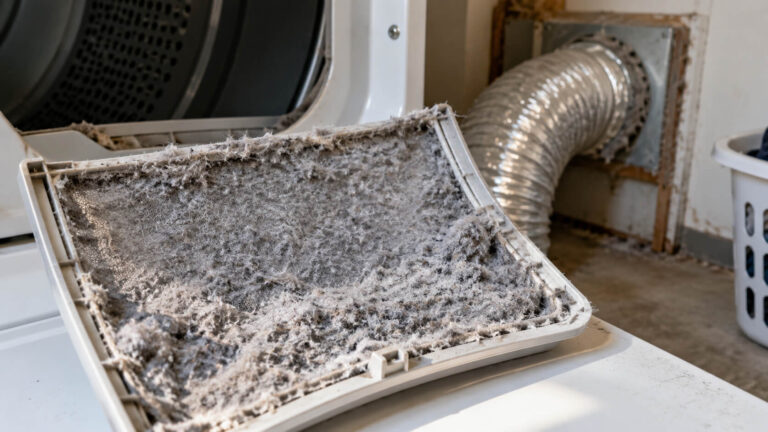
4. Clean the lint screen properly
Clean it with every load. If water beads on the mesh, dryer-sheet residue is clogging it; Whirlpool suggests washing it with warm water and a soft brush. Check the slot below the screen for lint too.
5. Inspect the duct behind the dryer
A kinked, crushed or sagging duct traps lint. The City of Toronto’s dryer fire safety guidance recommends rigid or flexible metal ducting and warns that plastic or foil ducts kink, sag and crush more easily. Whirlpool’s product help adds that many dryers perform best with a total equivalent vent length under 35 feet (about 10.7 metres), and each 90-degree elbow adds resistance. Your installation manual gives the exact limit.
6. Check the exterior vent hood
Go outside while the dryer runs on heat. The flap should open and you should feel steady, warm air. Weak airflow means a restricted vent. The US National Fire Protection Association (NFPA) advises cleaning lint out of the vent pipe at least once a year, or sooner if drying takes longer than normal.
In the United States, the NFPA report Home Dryer Fires (2020) estimated an average of 13,820 home fires a year involving clothes dryers in 2014–2018, with failure to clean as the leading factor contributing to ignition.
7. Right-size the load
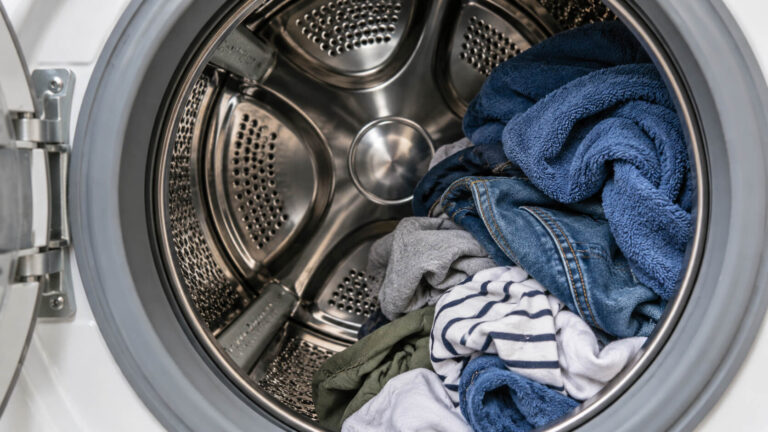
Whirlpool recommends filling the drum about one-half to three-quarters full so items tumble freely.
8. Clean the moisture sensor bars
Frigidaire’s support guidance says fabric softener sheets can leave residue on the sensor bars inside the drum and recommends wiping them with rubbing alcohol.
Winter in Edmonton: snow and ice at the vent hood
Drifting snow can bury a low vent hood, and moist exhaust can freeze around the flap and hold it shut. Either way, hot, damp air has nowhere to go, so checking the outdoor flap belongs on your winter routine alongside clearing the furnace and water heater vents.
The US Fire Administration’s report Clothes Dryer Fires in Residential Buildings (2008–2010) found that US residential dryer fires were more common in fall and winter, peaking in January. In practice:
- After snowfall or strong wind, check that the hood is clear and the flap swings freely.
- Brush snow away by hand or with a soft broom. Don’t chip ice with a screwdriver or shovel; you can crack the hood.
- If the flap is frozen shut, don’t keep running heated cycles against it.
- Frost that keeps returning can point to a long run, a duct through a cold space or damp lint inside; have it inspected.
Parts that fail when a dryer won’t heat
If the setting, breaker and airflow check out and the heat test is still cold, a component has probably failed. Testing means removing panels and using a multimeter around 240-volt wiring, so this is usually the point to call a technician.
- Thermal fuse: a blown fuse is usually a symptom of overheating, most often from restricted venting. Replace it without fixing the cause and the new one can blow too. Never bypass a thermal fuse with a wire or jumper, even for one load.
- Heating element: the coil can break with age, leaving no heat.
- High-limit thermostat: can fail open or keep tripping because of poor airflow.
- Cycling thermostat or thermistor: a fault can cause no heat, low heat or overheating.
- Control board or relay: on electronic models, a failed relay can keep the element off.
- Power cord and terminal block: loose or burned connections can cut one side of the 240-volt supply; GE advises replacing burnt or frayed wiring.
Symptoms, likely causes and when to call
| Symptom | Likely cause | Safe DIY check | Call a technician when |
|---|---|---|---|
| Drum turns, no heat | Half-tripped breaker, setting, thermal fuse, element | Check setting, reset breaker, heat test | Still cold after reset, or breaker trips again |
| Loads need two cycles | Clogged screen or vent, crushed duct, overloading | Clean screen, check duct and hood airflow | Airflow stays weak after cleaning |
| Cycle ends early, clothes damp | Coated moisture sensor bars | Wipe bars with rubbing alcohol | Timed cycles dry but sensor cycles don’t |
| Cabinet very hot or burning smell | Restricted vent, lint build-up | Stop and unplug the dryer | Right away, before using it again |
| No heat in winter | Snow- or ice-blocked hood | Clear the hood gently | Ice keeps returning |
| New fuse blows again | Root cause not fixed | Check the full vent run | Always |
Common mistakes to avoid
- Assuming the dryer is dead because it still tumbles. You may pay for parts you don’t need. Reset the breaker fully first.
- Replacing a thermal fuse without fixing the vent. The new fuse blows too. Clean and inspect the whole vent run.
- Using plastic or foil accordion duct. It crushes and traps lint. Use rigid or semi-rigid metal.
- Pushing the dryer tight against the wall. This flattens the duct. Leave the clearance your manual specifies.
When to call a technician
- The heat test is still cold after checking the setting and breaker.
- The breaker trips again, or you see scorch marks or smell burning.
- A thermal fuse has blown, especially more than once.
- Drying stays slow after cleaning and airflow at the hood is still weak.
A technician from our dryer repair service can test the fuse, thermostats, element and power connections and find what made a fuse blow. Cost depends on the failed part, parts availability and whether the vent needs work; you get a clear estimate before work begins.
How to test the dryer after a fix
- Repeat the five-minute empty heat test; the drum should feel clearly warm.
- Run a normal heated load and confirm strong, warm airflow at the outside hood.
- Compare the drying time with your usual time for a similar load.
- Over the next few loads, watch for burning smells, breaker trips or cycles that stop early.
Frequently asked questions
Why is my dryer running but not heating?
Most often a half-tripped breaker, a no-heat setting, a blown thermal fuse or a failed heating element. Check the setting and breaker first.
Can a tripped breaker stop a dryer from heating?
Yes. If one side of the double-pole breaker trips, the dryer can run on 120 volts, but the element needs 240 volts.
Is there a reset button for dryer heat?
Most household dryers don’t have one, and a thermal fuse cannot be reset. A full breaker reset is the closest thing.
How do I know if the thermal fuse is blown?
A continuity test with a multimeter, done with the dryer unplugged, confirms it. Because fuses blow for a reason, the vent should be checked too.
Can a clogged vent stop a dryer from heating?
Yes. Poor airflow can make the high-limit thermostat cut the heat repeatedly or blow the thermal fuse.
How often should I clean the dryer vent?
NFPA advises at least once a year; Whirlpool suggests every one to two years or whenever drying slows.
Is it worth repairing a dryer that won’t heat?
Often only one part has failed, but age, condition and repair cost all matter. Our guide on whether to repair or replace an appliance walks through the decision.
What if I have a gas dryer?
Beyond the settings, lint screen and vent, a gas dryer needs a licensed gas technician. If you smell gas, leave and call your gas utility.
The bottom line
Start with the free checks: the cycle setting, a full breaker reset, the lint screen, the duct and the exterior hood. If the dryer heats but dries slowly, fix the airflow. If it’s still cold, a part has likely failed, and why it failed matters as much as the part.
If you’re in Edmonton, Sherwood Park, Spruce Grove or nearby, Dr. Appliance Fix can diagnose an electric dryer that won’t heat and explain the repair before work begins. Many repairs are done in the same visit, depending on the issue and parts availability. Book a dryer repair appointment online or call +1 (587) 501-7136.