When a washing machine won’t drain, it is usually blocked, not broken. The most common causes are a clogged drain pump filter (on front-loaders), a kinked or clogged drain hose, a slow household drain, or too many suds. Unplug the washer, remove the standing water safely, then work through the checks below in order; if the drain pump hums without moving water, or makes no sound at all, it’s time for a technician.
In this guide:
- Safety first
- How a washer drains
- How to drain a washer full of water
- Front-load vs top-load differences
- Step-by-step: find the cause
- Drain error codes by brand
- When to call a technician
- Testing after a fix and common mistakes
- A DIY-or-pro checklist and FAQ
Safety first
- Unplug the washer before touching the filter, hoses or panels. If water has reached the plug or outlet, switch off the washer’s circuit at the breaker panel first.
- Let hot water cool. After a hot cycle, Samsung’s US support page suggests waiting about an hour before draining by hand.
- Don’t force a locked door. Front-loaders stay locked while water is in the drum; forcing the door can break the latch and flood the floor.
- Never bypass the lid switch or door lock. They stop the drum from spinning while you can reach into it.
How a washer drains, and why it stops
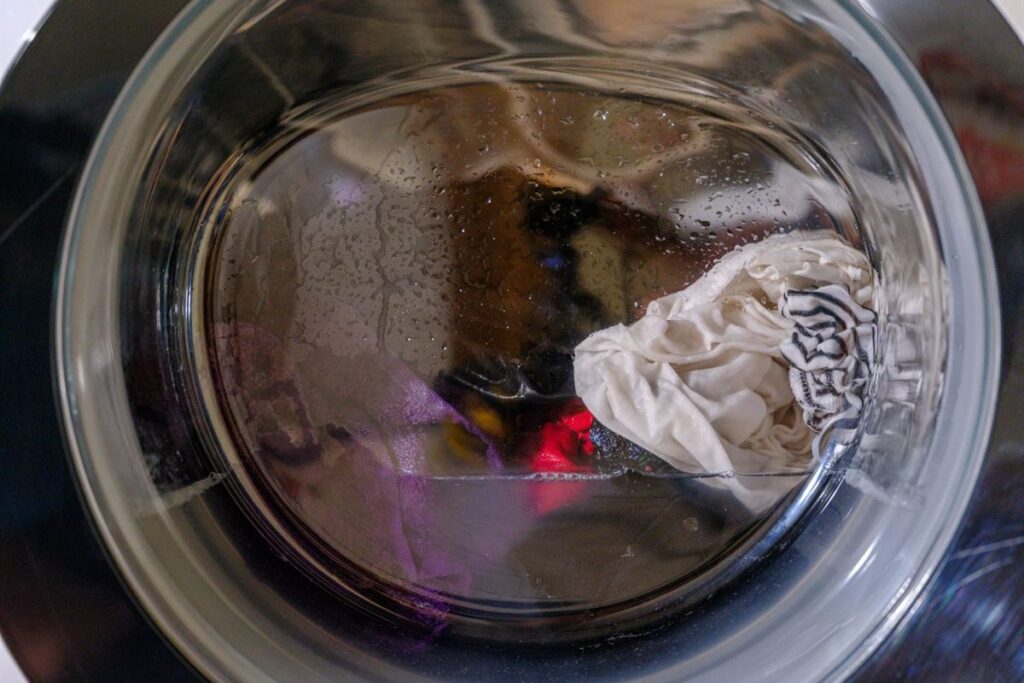
An electric drain pump pushes water up the drain hose into a standpipe (the vertical drainpipe behind the washer) or a laundry tub. Most front-loaders have a drain pump filter, or coin trap, that catches lint and small objects; most newer top-loaders have no filter you can reach. If the water level doesn’t drop fast enough, the washer stops, shows an error code or skips the spin, leaving clothes soaking wet.
How to drain a washer full of water
First, let the machine try: select Drain & Spin or Spin Only, as LG’s guide to its top-loader OE code recommends. If nothing drains, unplug the washer and drain it by hand.
Front-load washers
- Lay towels down and set a shallow pan in front of the washer.
- Open the access panel at the bottom front (on some Whirlpool and Maytag models, a pull-out drawer at the base).
- If there’s a small emergency drain hose beside the filter, unclip it, hold the end over the pan and remove the cap. Recap it whenever the pan fills.
- No hose? Turn the filter counterclockwise slowly, just enough to let water trickle out.
- When the flow stops, remove the filter, clear out lint and objects, rinse it, and screw it back in firmly.
Top-load washers
Bail the water into a bucket with a small container, or lift the drain hose out of the standpipe and lower its end into a bucket on the floor (Maytag’s moving instructions empty the hose this way). Raise the hose end above the tub’s water level to pause the flow while you empty the bucket. If nothing comes out, keep bailing: the blockage is likely in the hose or pump.
Front-load vs top-load: what’s different
| Feature | Front-load | Top-load |
|---|---|---|
| Drain pump filter | Usually behind a bottom-front panel or drawer | Usually none on newer models |
| Draining by hand | Filter or emergency drain hose into a pan | Bail out, or lower the hose into a bucket |
| Door or lid | Stays locked while water is in the drum | Must be closed (locked on many models) to drain and spin |
| Most likely causes | Clogged filter, kinked hose, excess suds | Clogged hose, lid switch or lid lock, blocked pump |
Step-by-step: find the cause
1. Rule out settings and the lid
According to Whirlpool’s drain-and-spin guide, gentle and hand-wash cycles spin slowly and leave clothes wetter, and an overloaded or unbalanced load can stop draining. GE Appliances notes that some top-loaders pause up to three minutes between stages. On a top-loader, close the lid firmly; Whirlpool says it must be closed to drain and spin.
2. Clean the drain pump filter
LG, Samsung and Whirlpool all list a clogged filter as a cause of their drain codes. Clean it as described above, then run Spin Only. It worked if the drum empties and no error code appears.
3. Check the drain hose
- Kinks: a washer pushed against the wall can pinch the hose. LG recommends at least 10 cm (4 in) of clearance behind its washers.
- Clogs: with a bucket ready, disconnect the hose and check that water runs freely through it.
- Too deep or sealed: Whirlpool’s F9 E1 page says no more than 4.5 in (113 mm) into the drainpipe, and no tape; deeper or sealed, drained water can siphon back.
- Too high: Whirlpool and GE Appliances give about 96 in (244 cm) as the maximum drain height for full-size washers.
4. Test the household drain
GE Appliances suggests pouring water straight into the standpipe; LG suggests running a spin cycle with the drain hose in a bucket. If the washer empties into the bucket easily, the problem is the plumbing. An overflowing standpipe or gurgling nearby drains call for a plumber, not an appliance technician.
5. Clear excess suds
Whirlpool’s F21 guidance says non-HE detergent, or too much detergent, can cause excessive suds and draining problems; LG lists suds as a cause of OE. HE (high-efficiency) washers need low-sudsing HE detergent. Run a rinse and spin with no detergent; it worked if no foam remains.
6. Check for a frozen hose
In Edmonton winters, a washer in an unheated garage or by a cold exterior wall can freeze. For a frozen unit (code FF), LG suggests pouring warm water (50–60 °C) into the drum, waiting one to two hours, wrapping the hose in a warm wet towel, then running Spin Only. Keep open flames away from hoses.
7. Listen to the drain pump
LG suggests running Spin Only and listening: a hum means the pump motor is running. With the filter and hose clear, our reading is that a hum without draining points to a jammed impeller (the pump’s small fan), and silence to a failed pump or a wiring, control or lid-lock problem. Both are usually technician jobs.
Drain error codes by brand
Meanings below come from each manufacturer’s support pages, checked in October 2026 (mostly North American pages). Codes vary by model, so confirm them in your manual.
| Brand | Code | What the manufacturer says |
|---|---|---|
| LG | OE | The washer can’t drain the water |
| LG | FF | The unit is frozen |
| Samsung | 5C or 5E (nd on some models) | Water isn’t draining at the correct speed, or at all |
| Samsung | 4C or 4E | Not a drain code: water isn’t entering the washer correctly |
| Whirlpool | F21 (front-load) | Drain time is longer than expected |
| Whirlpool | F9 E1, or drn on some top-loaders | The washer can’t drain correctly or takes too long |
| GE | Po, or flashing Rinse light (2015+ top-loaders) | It took too long to pump out; there may be a clog |
Whirlpool suggests resetting F21 by unplugging the washer for five minutes. If any code returns after the checks above, note it with your model number.
When to call a technician
| Symptom | Likely cause | DIY check | Call a technician when |
|---|---|---|---|
| Water in drum, drain code | Clogged filter or hose | Clean filter, check hose | The code returns with both clear |
| Pump hums, no water moves | Jammed or blocked pump | Clean filter, run Spin Only | It still won’t drain |
| No pump sound | Failed pump, wiring or control | Unplug a few minutes, retry | Still silent |
| Top-loader won’t drain or spin, lid closed | Lid switch or lid lock | Clear lint around the latch | Lid isn’t detected |
| Standpipe overflows | Household drain clog | Bucket test | Call a plumber instead |
Our washer repair service covers front-load, top-load and stacked units.
How to test the washer after a fix
- Run Spin Only with the drum empty; watch the standpipe for overflow and the filter cap for drips.
- Run a quick cycle with a few towels and no detergent. The drum should empty without a code, and the towels should come out damp, not dripping.
- Check the floor again after the next full load.
Common mistakes to avoid
- Opening the filter all at once → a flooded floor → loosen it slowly and close it between pans.
- Taping the hose into the standpipe → siphoning and slow draining → keep a loose fit with an air gap.
- Adding detergent “to clean it out” → more suds → use HE detergent at the recommended dose.
- Bypassing the lid switch → injury risk and a hidden fault → replace the faulty part.
DIY, technician or plumber? A quick checklist
- DIY is fine if the fix is cleaning the filter, straightening the hose or clearing suds, and the washer passes the test above.
- Call a technician if the code returns, the pump hums or stays silent, water leaks from inside the cabinet, or the fix means removing panels.
- Call a plumber if the washer drains well into a bucket but the standpipe overflows.
Repair cost depends on the part (a blockage versus a pump, lid lock or control board), access (stacked units take longer), parts availability and the washer’s age. If an older washer needs an expensive part, our guide on whether to repair or replace an appliance can help.
Frequently asked questions
Why is my washing machine full of water and not draining?
Usually a clogged drain pump filter, a kinked or clogged hose, or a slow standpipe. Next come excess suds, an undetected lid, a frozen hose or a failed pump.
How do I drain a front-load washer full of water?
Unplug it, put towels down, and release the water into a shallow pan through the emergency drain hose or by slowly loosening the drain pump filter.
Can too much detergent stop a washer from draining?
Yes. Whirlpool and LG both link excess suds to draining problems. Use measured HE detergent in HE washers.
How do I know if my washer’s drain pump is bad?
If the filter and hose are clear but it still won’t drain, listen during Spin Only. A hum suggests a jam; silence suggests a failed pump or a power or control problem.
What does OE mean on an LG washer?
LG says OE means the washer can’t drain. Check the drain hose, clean the drain pump filter and cut back on detergent.
Does 4C on a Samsung washer mean it won’t drain?
No. Samsung lists 4C as a water supply (filling) error. Its drain codes are 5C and 5E.
Why won’t my top-load washer drain or spin?
Check that the lid is fully closed and the hose isn’t kinked. If a faulty lid switch or lid lock doesn’t register the lid, the washer won’t drain or spin; replace that part, don’t bypass it.
My clothes are still damp after drying. Is it the washer or the dryer?
If clothes leave the washer dripping, the washer isn’t draining or spinning properly. If they leave it only damp but the dryer runs without heat, see our guide on a dryer that’s not heating.
Next step: drain it, check it, then decide
Check the filter, hose, household drain and suds first. If the washer still won’t drain, the pump, lid lock or controls need a proper diagnosis. Dr. Appliance Fix serves Edmonton and nearby communities, with same-day or flexible appointments, including Sundays. The technician explains the repair and gives a clear estimate before work begins, and many repairs are finished in the same visit, depending on the issue and parts availability. Call +1 (587) 501-7136 or book a washer repair visit online.